




Cooling Tower Services
We provide various services for the maintenance and repair of your cooling tower.
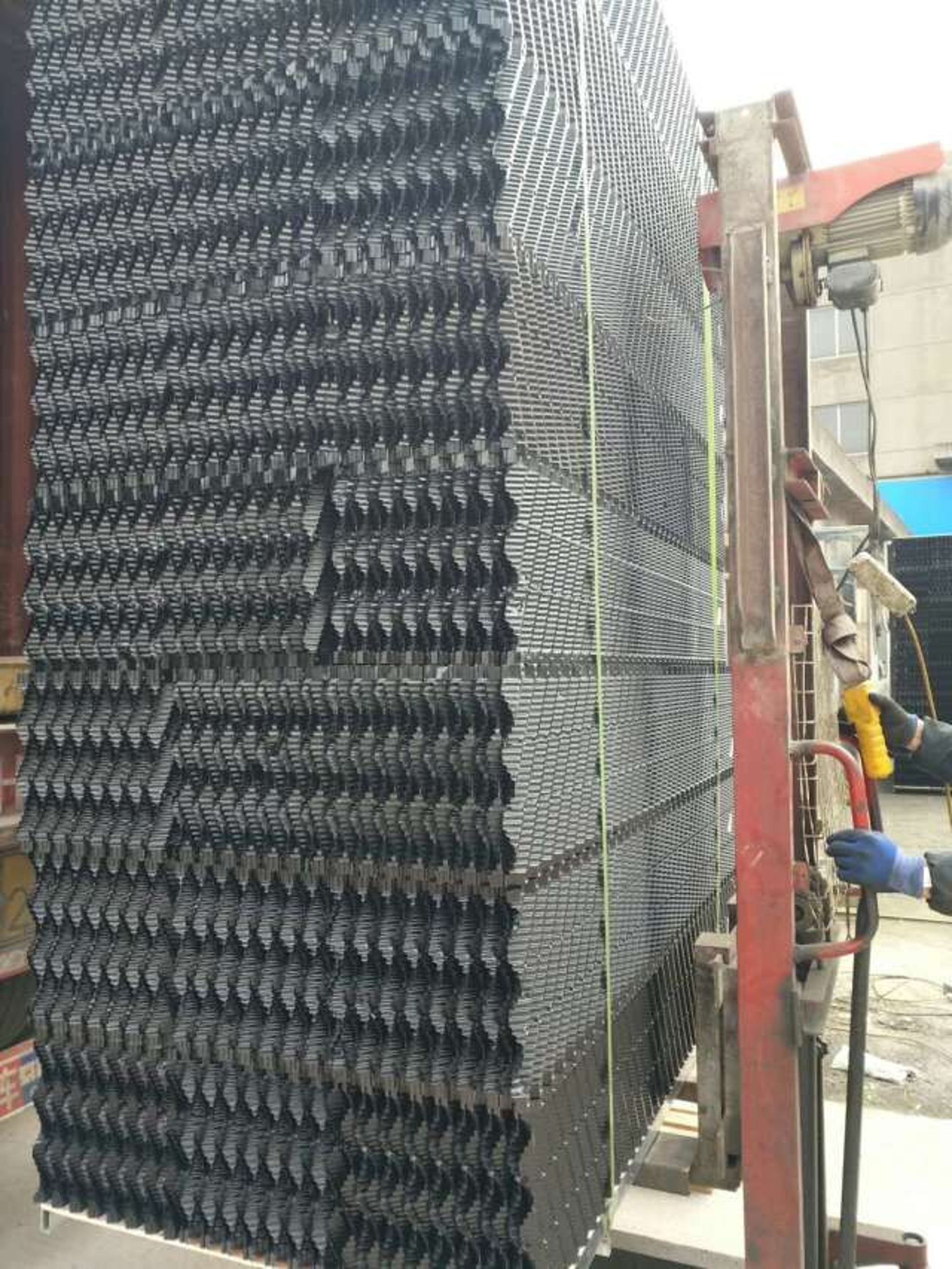
Filler Replacement
We replace the filler or infill of the cooling tower to increase efficiency.
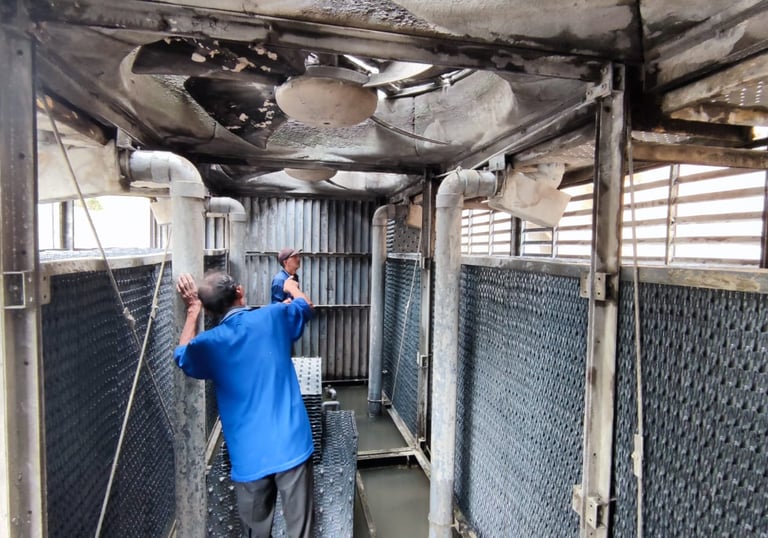
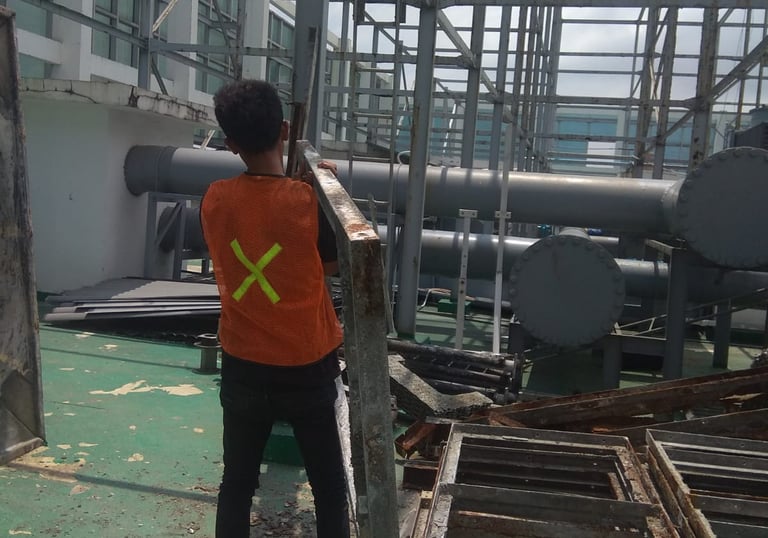
Structural Repair
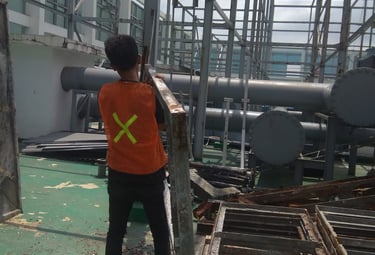
Cooling tower structure replacement service to ensure strength and durability.
We also offer water monitoring services to detect scale levels, corrosion and other problems in cooling towers.
Water Monitoring
Frequently Asked Questions about cooling towers
Why should cooling tower fillers be replaced?
Filler (or fill media) primarily serves to expand the contact surface area between hot water and air, making the cooling process more efficient. If the filler is dirty and damaged, cooling performance will be reduced. Generally, replacement is required once every 5 years.
What replacement & repair services are offered?
We offer filler, structure, fan motor replacement, fiber repair, and cooling tower modifications.
How can I monitor water quality?
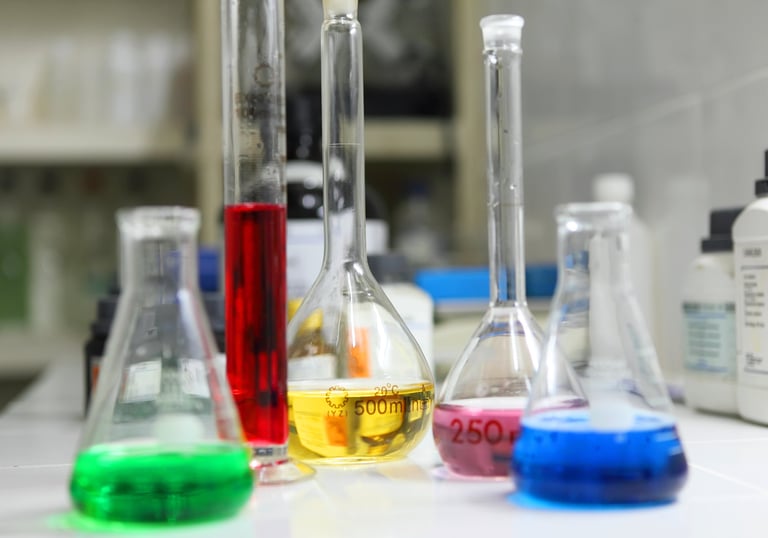
Water monitoring is conducted to check for scale and corrosion levels, and laboratory tests are performed to ensure the quality of the cooling tower water. We typically check several conditions of the source water, the water after it has been filtered, and the water in the cooling tower. If you want new technology, we provide a multiparameter controller so you can simply view the data in real time from your mobile phone or laptop because our system is connected to ModBas RS 485.
What is Cleaning & flushing cooling tower?
1. Cleaning for Existing Units
Over time, old cooling tower units are prone to buildup of scale, moss, algae, and sediment. This dirt can:
Decrease Efficiency: Inhibit the heat transfer process, causing the system to work harder and waste energy.
Damage Components: Cause corrosion and blockages in pipes, fillers, and heat exchangers.
Therefore, routine cleaning is essential to restore the performance of existing units, prevent damage, and ensure that the system returns to optimal operation.
2. Flushing cooling towers for new units
Newly installed cooling tower units often still contain residues or fine particles left over from the assembly process, such as welding debris, dust, or oil. If not cleaned, these particles can:
Clog the system: Cause blockages in pipes and filters, which can disrupt water flow.
Cause Damage: Foreign particles can erode internal components, accelerating wear and tear.
Therefore, intensive flushing or rinsing of new units is essential to remove all residues before the unit begins operation. This is a crucial step to ensure the system runs smoothly from the first run.
Why should you use a chemical cooling tower?
Chemical cooling towers use chemicals to control scale formation, algae growth, and corrosion in cooling systems and extend equipment life.
What is a sidestream cooling tower?
A sidestream cooling tower is a system that diverts a portion of the water to improve efficiency and reduce contamination in the cooling tower water basin.
Why should cooling tower water must standard parameters?
Maintaining cooling tower water quality in accordance with standard parameters is not merely a procedure, but a vital investment in operational efficiency and sustainability. Uncontrolled water can cause a series of serious problems, including:
Corrosion: Water with unbalanced parameters can cause corrosion in metal materials, damaging pipes and internal components.
Scale: Excessive mineral content will form scale on the heat exchanger and filler, inhibiting heat transfer and forcing the system to work harder.
Microbial Growth: Poor water quality is an ideal breeding ground for bacteria, algae, and biofilm, which can clog pipes and cause health problems.
By maintaining water within the standards, you will achieve maximum cooling efficiency, lower operating costs, and longer equipment life.
What is a self-cleaning filter for cooling towers?
Automatic filtration designed to continuously remove solid particles from water circulation in pipes, this device is equipped with a pressure sensor that automatically triggers the cleaning process (backwash) when it detects dirt buildup.
How to detect water containing scale before it enters the cooling tower
There are many ways to detect scale buildup, typically through manual lab testing or through an automated (real-time) hardness controller. We recommend an automated system because it reduces labor and triggers an alarm if scale buildup exceeds the specified standard. For more information on how to prevent scale buildup, please consult our sales or technical support team.
How do you know if the water contains corrosion in the cooling tower?
It can be done visually, or with manual lab tests and a water corrosion controller. This system can be directly connected to your phone or laptop. Once the threshold is exceeded, there will be an alarm and warning.
Why should you use automatic blowdown in a cooling tower?
The addition of an automatic blowdown device to a cooling tower is essential to maintain efficiency and extend the life of the system. Blowdown is the process of discharging a portion of the water from the system to reduce the concentration of dissolved solids (TDS) that accumulate as a result of evaporation. If TDS is not controlled, it can cause serious problems:
This device can operate based on a TDS sensor or a timer. It must be installed to reduce the need for manual blowdown by engineers.
When should the cooling tower filler/infill be replaced?
Cooling tower replacement and repair services.
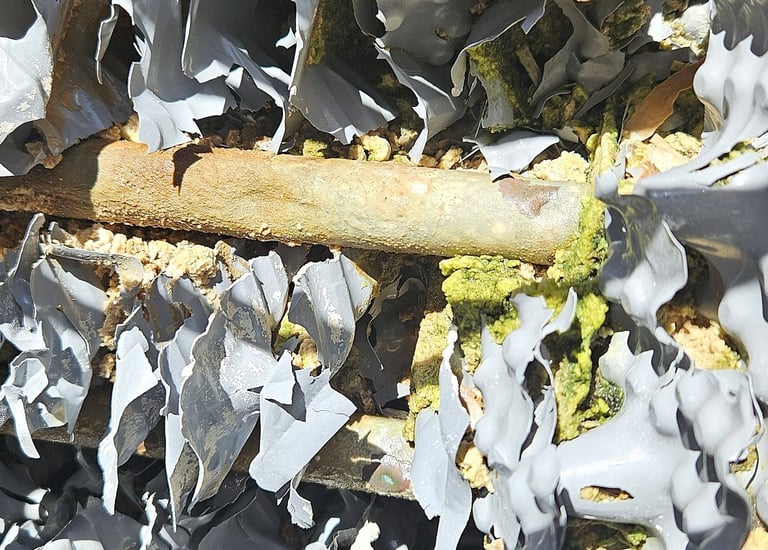
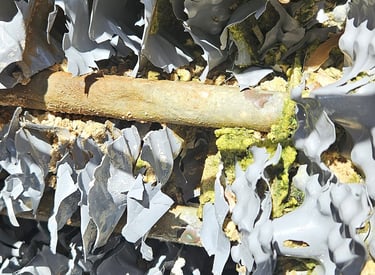
Replacement of Filler due to physical reasons
Scale and sludge buildup are common problems that indicate the need to replace cooling tower fillers.
Scale: A hard mineral layer that forms on fillers due to high TDS concentrations. Scale inhibits heat transfer and significantly reduces cooling efficiency.
Sludge: Deposits of dirt, dust, and sediment that stick to the filler. Sludge clogs air and water flow, causing system performance to decline dramatically.
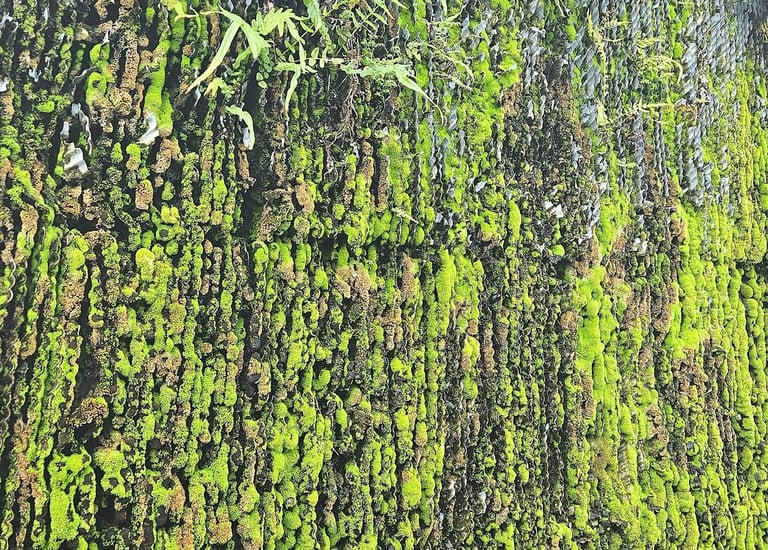
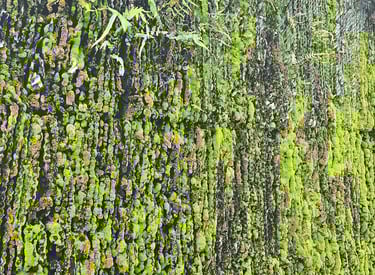
Replacement of filler due to moss
Heavy moss buildup will clog the gaps in the filler, inhibiting air and water flow. This leads to a drastic decrease in cooling efficiency, increases the workload on the system, and potentially causes sanitation issues.
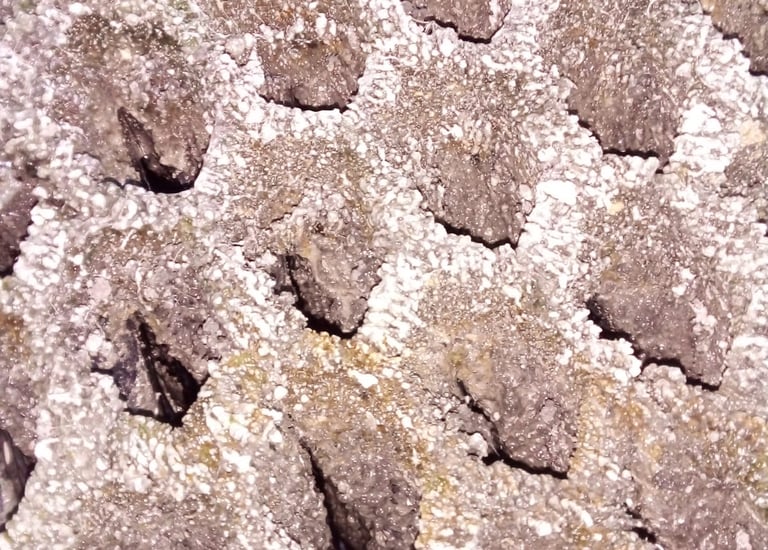
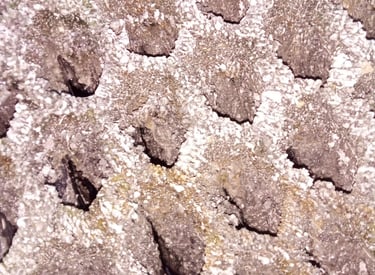
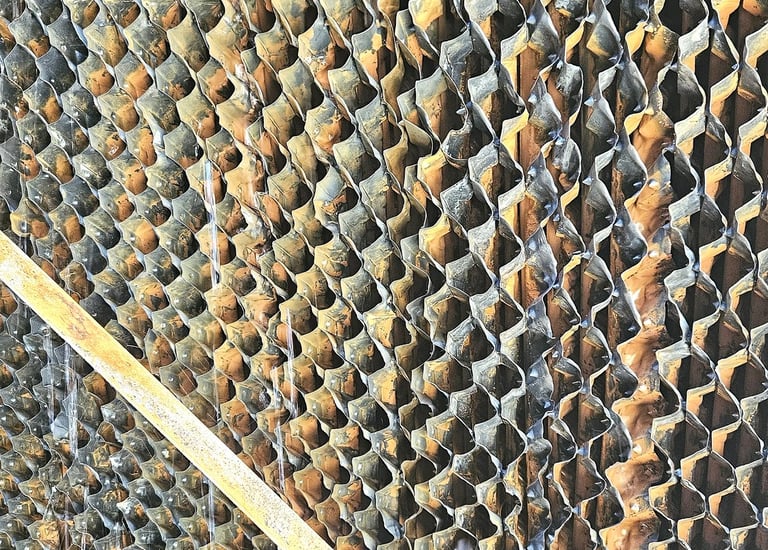
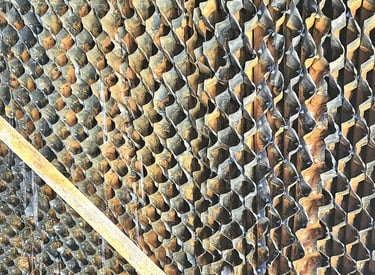
Replacement of filler due to scaling
Replacement of filler due to corrosion in the system
Corrosion will damage the structural integrity of the filler. As a result, the filler can become brittle and crumble, reducing the contact area essential for the cooling process and causing corrosion particles to spread throughout the system.
Physical Damage: Fillers become brittle, crack, or warp due to extreme temperatures, chemical exposure, or age.