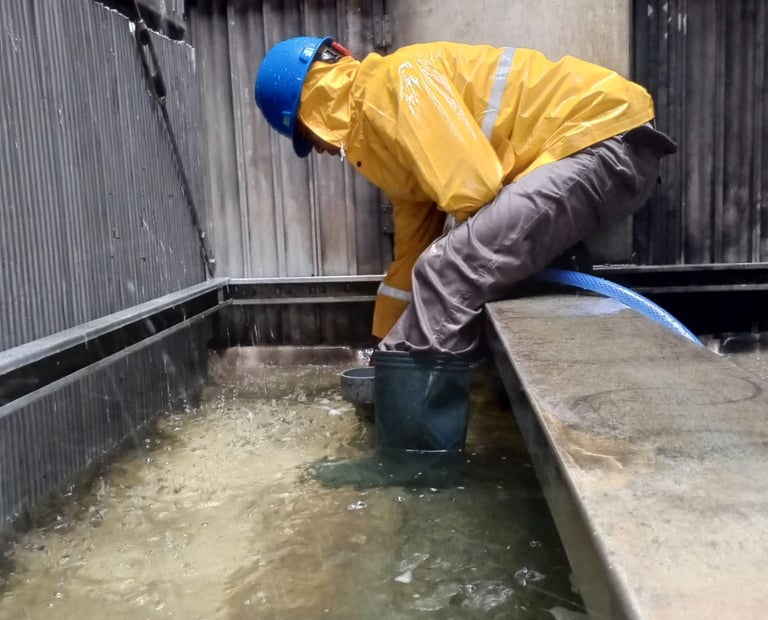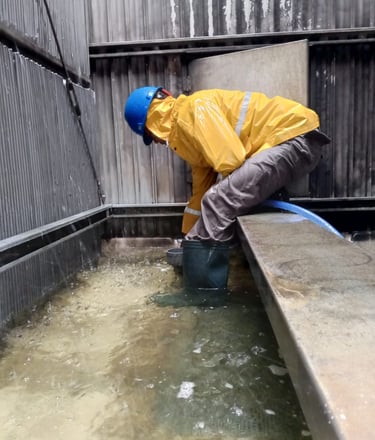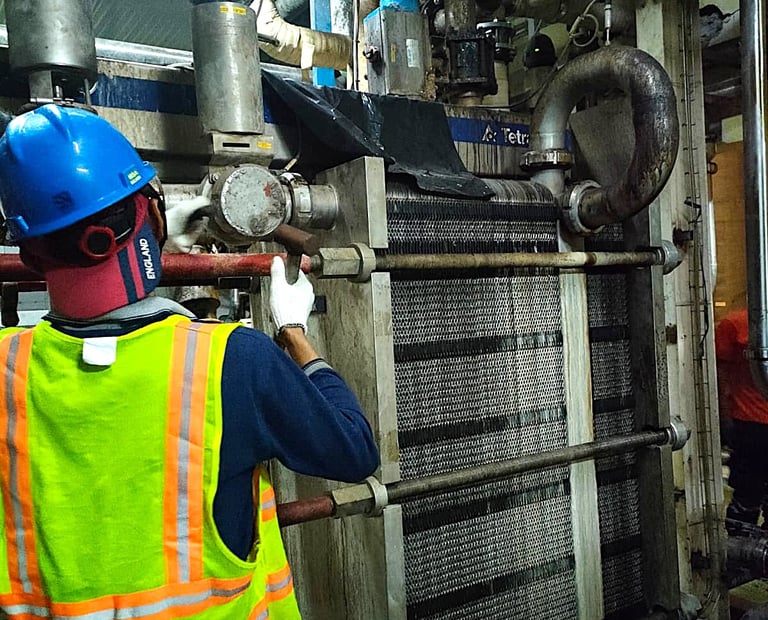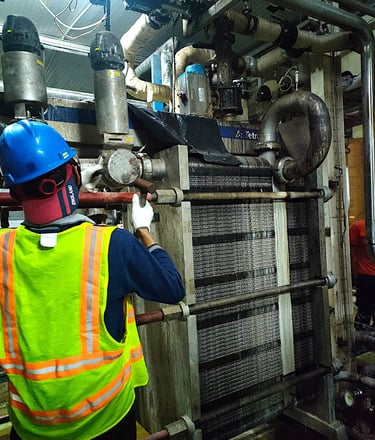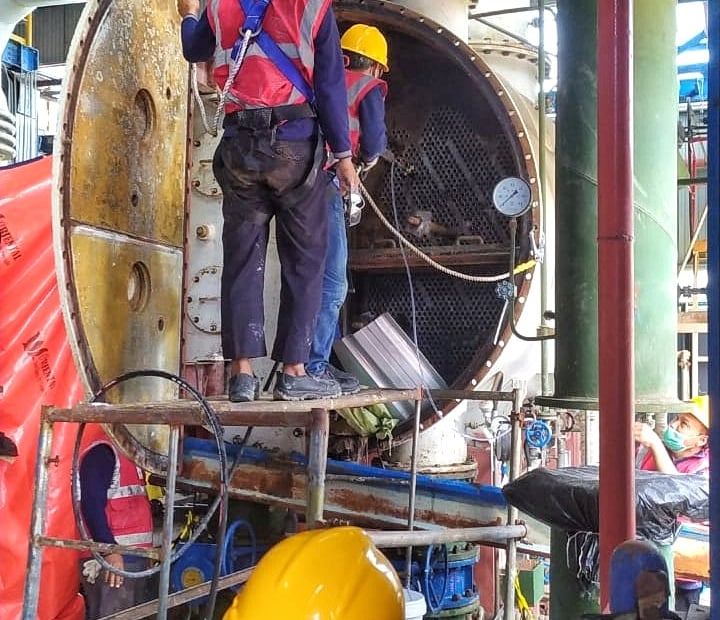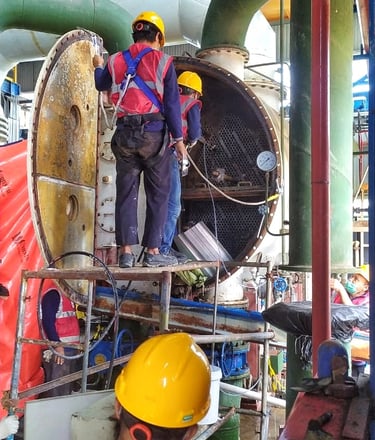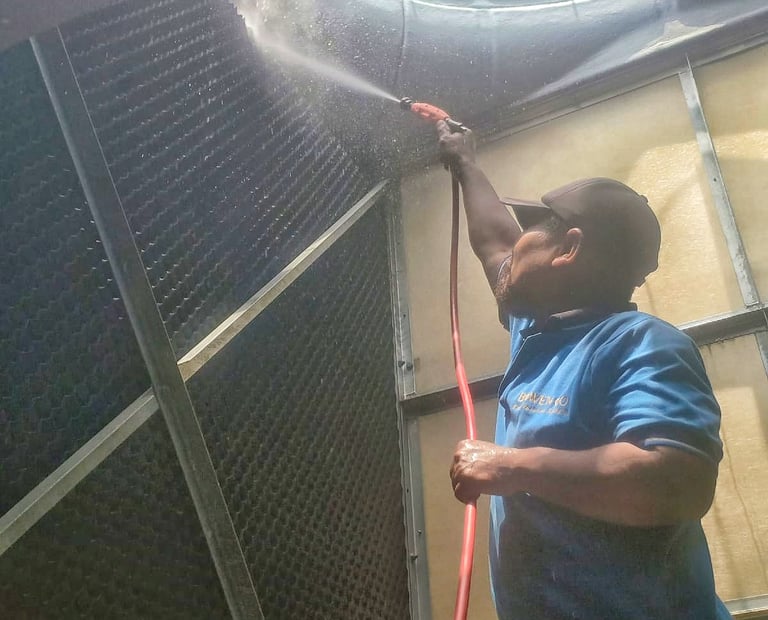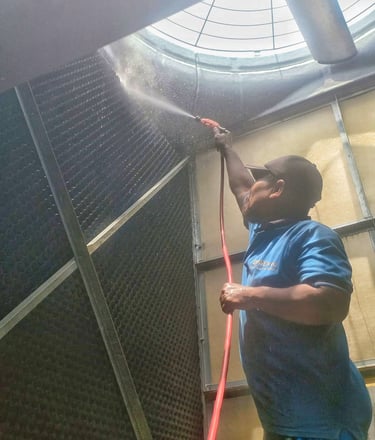




Flushing & Cleaning Chiller - cooling tower
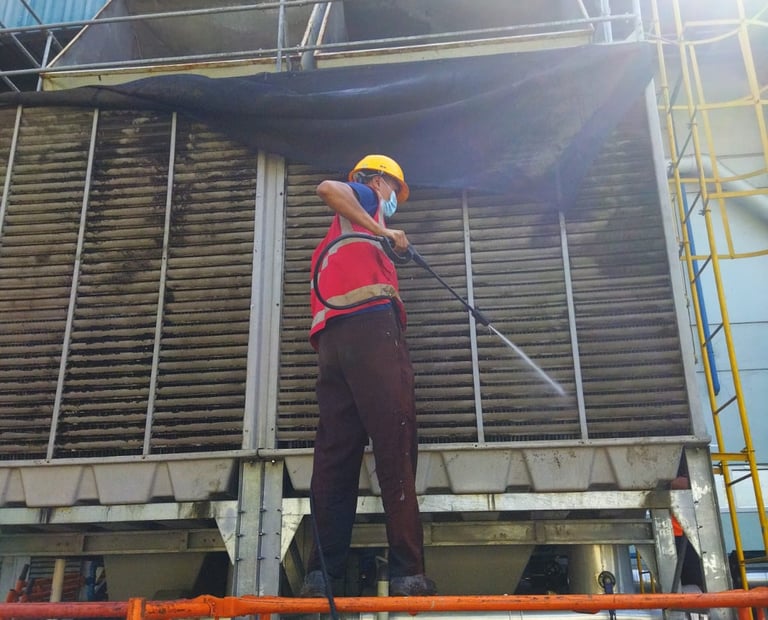

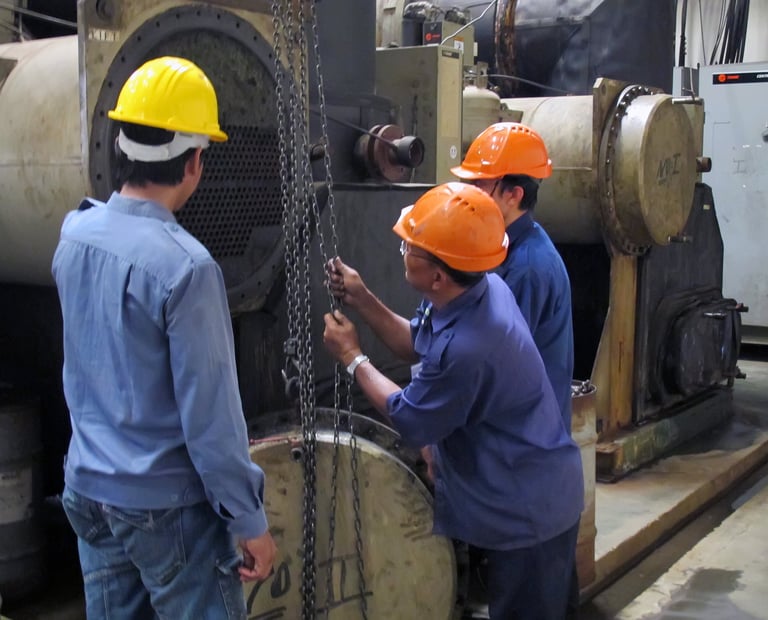

The Importance of Flushing New Units, General Cleaning, and High Approach Problems in Cooling Systems
1. Why Must New Units Be Flushed Before Operation?
When a new cooling tower or chiller system is installed, there are various contaminants that must be cleaned through the flushing process:
What Is Cleaned During Flushing?
Construction debris: metal shavings, dust, solder flux, and installation residue
Lubricants and grease: residues from manufacturing and installation processes
Early corrosion particles: oxidation on metal surfaces that are not yet fully protected
Risks of Not Flushing for new unit
Clogging of strainers and nozzles
Decreased efficiency of heat transfer
Early corrosion on system components
Our Flushing Process:
Pre-flushing with pressurized water
Chemical flushing using special alkaline chemicals
Final rinsing and passivation for anti-corrosion protection using special chemicals
2. Why is General Cleaning of Cooling Towers & Chillers Necessary?
Problems with Cooling Towers Without Cleaning
Biofouling: growth of algae and bacteria
Scaling: accumulation of minerals (CaCO3, MgSiO3)
Under deposit corrosion: hidden corrosion under scale
Sludge: sludge deposits in the basin
Problems with Chillers Without Cleaning
Tube fouling: accumulation of deposits in heat exchanger pipes
Reduced heat transfer: decreased efficiency
Increased energy consumption: increased compressor load
General Cleaning Process:
Mechanical cleaning: brushing and hydrojetting
Chemical cleaning: acid cleaning and neutralizing treatment
System inspection: inspection of cleaning results
3. Why is the Approach High?
Approach temperature (the difference between the cooling tower outlet water temperature and the wet bulb temperature) increases due to:
Causes of High Approach
Fouling on the filler
Decreased heat transfer surface area
Suboptimal air flow
Clogged nozzles
Uneven water distribution
Reduced distribution area
Dirty drift eliminator
Hindered air flow
Decreased cooling capacity
Unbalanced air flow
Inappropriate fan speed
Air bypass occurs
4. Benefits of Cleaning the Cooling System
Restored thermal efficiency (approach temperature returns to normal)
Energy savings (reduced fan and pump load)
Prevention of under deposit corrosion
Extended equipment life
Reduced maintenance costs
5. Under Deposit Corrosion: Silent Killer
What is Under Deposit Corrosion?
A condition where:
Local corrosion occurs under the deposit/scale layer
Pipes appear intact because scale covers corrosion holes
When cleaning is performed, scale is removed and corrosion holes become visible
Mechanism of Occurrence:
Deposits create differences in oxygen concentration
The area under the deposit becomes anodic
Local corrosion occurs progressively
When cleaning, scale is removed and holes become visible
Prevention Solutions:
Routine cleaning to remove deposits
Proper water treatment
Our Professional Services
We provide:
Flushing of new units with specialized chemicals
General cleaning of cooling towers, PHEs, and chillers
Performance analysis for system optimization
Integrated water treatment programs
📞 Contact our expert team for a free consultation
Get an efficient and trouble-free cooling system.
“Preventive maintenance is cheaper than emergency repairs”